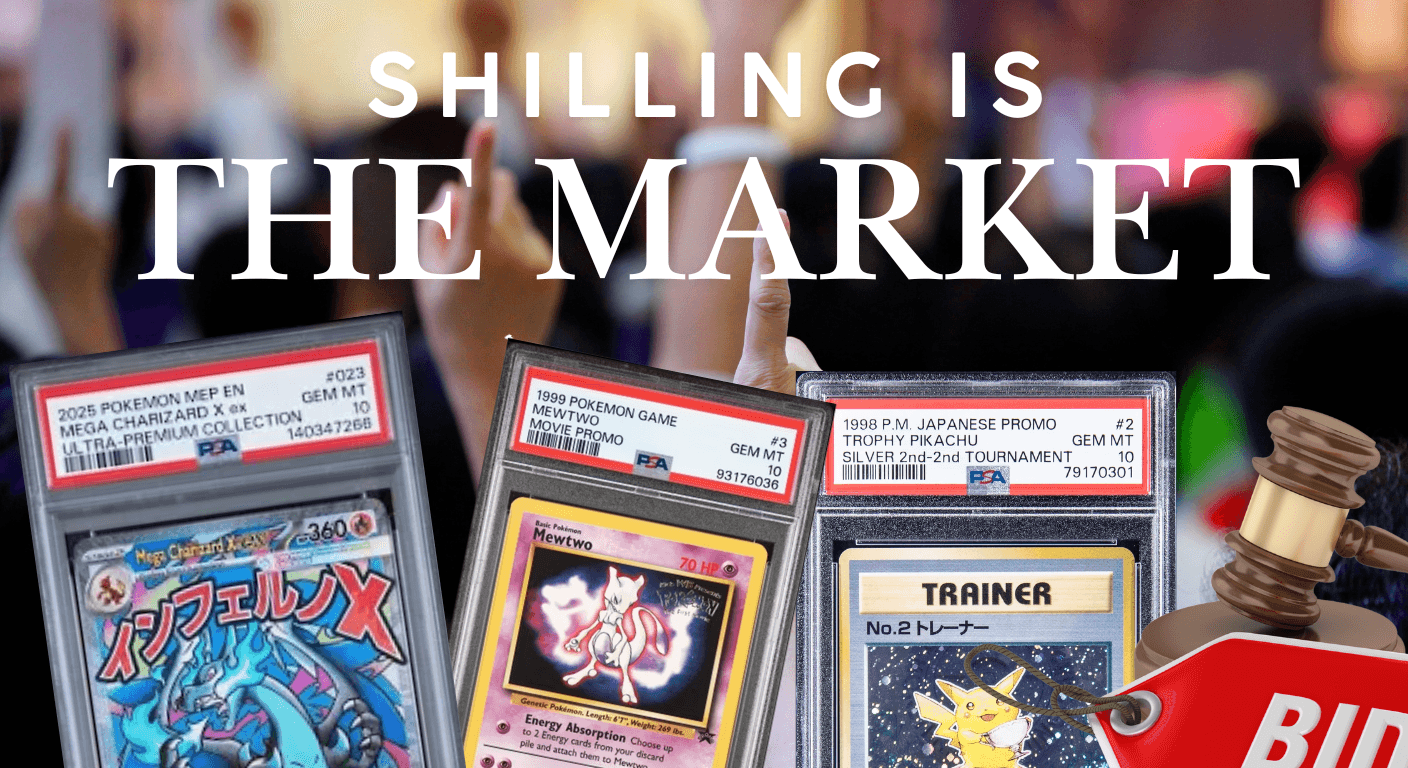
Shill bidding is back in the card-hobby conversation. In 2025, a Fanatics Collect auction put a name to the suspicion that has haunted the hobby forever.
Patrick Ryan, a known figure in the space, was caught bidding on a lot in a way that lit up the timeline. His own explanation: he "mistakenly" bid, and that it was "very different than shill bidding." We'll take that explanation at face value and let the hobby debate it.
But the debate itself is the point. The moment a fake-looking bid appears, every collector in the room asks the same quiet question.
Are we collecting? Or are we moving money?
Most collecting is a genuine passion market. People buy the Charizard because they love the Charizard. That is real and it is the majority of the hobby.
At the high end, something else is also true. Opacity, money-movement incentives, and documented manipulation are real. They've been real for decades. The honest version of this story holds both ideas at once.
When the CIA Curated Your Taste
In 1995, journalist Frances Stonor Saunders published a piece in The Independent titled "Modern art was CIA 'weapon.'" She expanded it into a 1999 book, "The Cultural Cold War."
Her reporting: during the Cold War, the CIA covertly helped fund the Congress for Cultural Freedom, which ran offices in roughly 35 countries. The agency promoted Abstract Expressionism as soft-power propaganda, proof that free societies produced free art.
Thomas Braden, a former executive secretary at MoMA, ran cultural operations for the agency. The overlap between the museum world and the intelligence world was not imaginary.
Now the balance, because it matters.
The CIA did not commission paintings. It did not instruct Pollock or Rothko on what to paint. New York Times critic Michael Kimmelman has argued that the "CIA controlled the market" thesis is overstated, and that MoMA was actually late to back these artists, not the engine behind them.
So hold the honest takeaway. Ideology and money shaped which art got elevated and where it traveled. That is documented. "A spy agency controlled what hangs on your wall" is too strong.
The lesson isn't conspiracy. It's that the value of a famous artwork was never a pure read on the canvas. Forces with budgets and agendas have always had a hand on the scale.
The Freeport and the Shell Company
On July 28, 2020, the US Senate Permanent Subcommittee on Investigations published a report. Senators Rob Portman and Tom Carper led it.
The finding: high-value art works as a vehicle for moving money, evading sanctions, and laundering value. The report's case study was the Rotenberg brothers, sanctioned Russian oligarchs.
After 2014 sanctions, the report found roughly $18.4 million in art purchases linked to them, with related activity running up to about $91 million. The buying ran through an agent, Gregory Baltser, and a chain of shell companies. The art market's anonymity made it possible.
Here is the part that should bother every collector. The art market is still largely outside US anti-money-laundering rules.
The 2020 Anti-Money Laundering Act extended Bank Secrecy Act requirements to antiquities dealers. It did not cover art dealers or auction houses. A 2025 Art Market Integrity Act was introduced to close that gap. As of now, the gap is open.
Then there's the freeport. Geneva's freeports are tax-deferred storage zones where art can sit, untaxed and unseen, changing hands without ever changing walls.
The case study there is the Bouvier affair. Yves Bouvier, sometimes called the "king of freeports," bought a Modigliani for roughly $93 million and sold it to collector Dmitry Rybolovlev for $118 million.
Be careful here. Bouvier was not convicted of anything. The Geneva criminal case was closed in December 2023 with no charges, and the parties settled. The dispute was over whether Bouvier acted as a dealer entitled to a markup or as a broker who should have charged a commission.
So this is not a fraud story. It's a transparency story. A market where a roughly $25 million spread can exist between what someone pays and what they're charged, inside a tax-deferred vault, is a market built on opacity.
That opacity is the soil. Manipulation grows in it.
Shill vs. Chandelier: The Thin Legal Line
Two things happen at auctions that sound similar and are legally opposite.
Shill bidding is placing fake bids to inflate a price with no intent to win. It is illegal. It can be prosecuted as wire fraud under 18 U.S.C. 1343, carrying up to 20 years. In New York it also runs into the Donnelly Act.
Chandelier bidding is legal. An auctioneer calls out fictitious bids, but only up to the reserve price, and reputable houses disclose that the practice exists. The line is the reserve. Below it, theater. Above it, fraud.
The fraud version is not hypothetical. In 2001, The New York Times reported on an eBay case where three men were charged after placing shill bids across roughly 1,100 art auctions, netting more than $450,000.
Which brings us back to the cards.
The 2025 Patrick Ryan / Fanatics Collect controversy is the hobby's version of this argument playing out in public. His stated position is that it was a mistake, not shilling. Separately, a civil lawsuit, Alt v. PWCC, has alleged bidding misconduct. That is a filed allegation in pending litigation, not a proven finding.
The structural problem underneath both is consignor bidding. Can the person selling the item also bid on it? Policies vary wildly. Heritage locks online consignors out from bidding on their own lots, but reserves the right to bid itself. SCP Auctions and RR Auction bar consignor self-bidding.
When the rules differ house to house, "is that bid real?" stops being paranoia. It becomes due diligence.
Bubbles Built on Hype
Manipulation doesn't always wear a trench coat. Sometimes it's just manufactured scarcity meeting a crowd that forgot the supply was a choice.
Beanie Babies. Ty Warner engineered scarcity by retiring lines and limiting distribution. At the 1998 peak, Ty was doing around $1 billion a year, and Beanie Babies reportedly made up about 10% of eBay's sales. The September 1999 retirement announcement broke the spell. Values fell to roughly 2% of their highs.
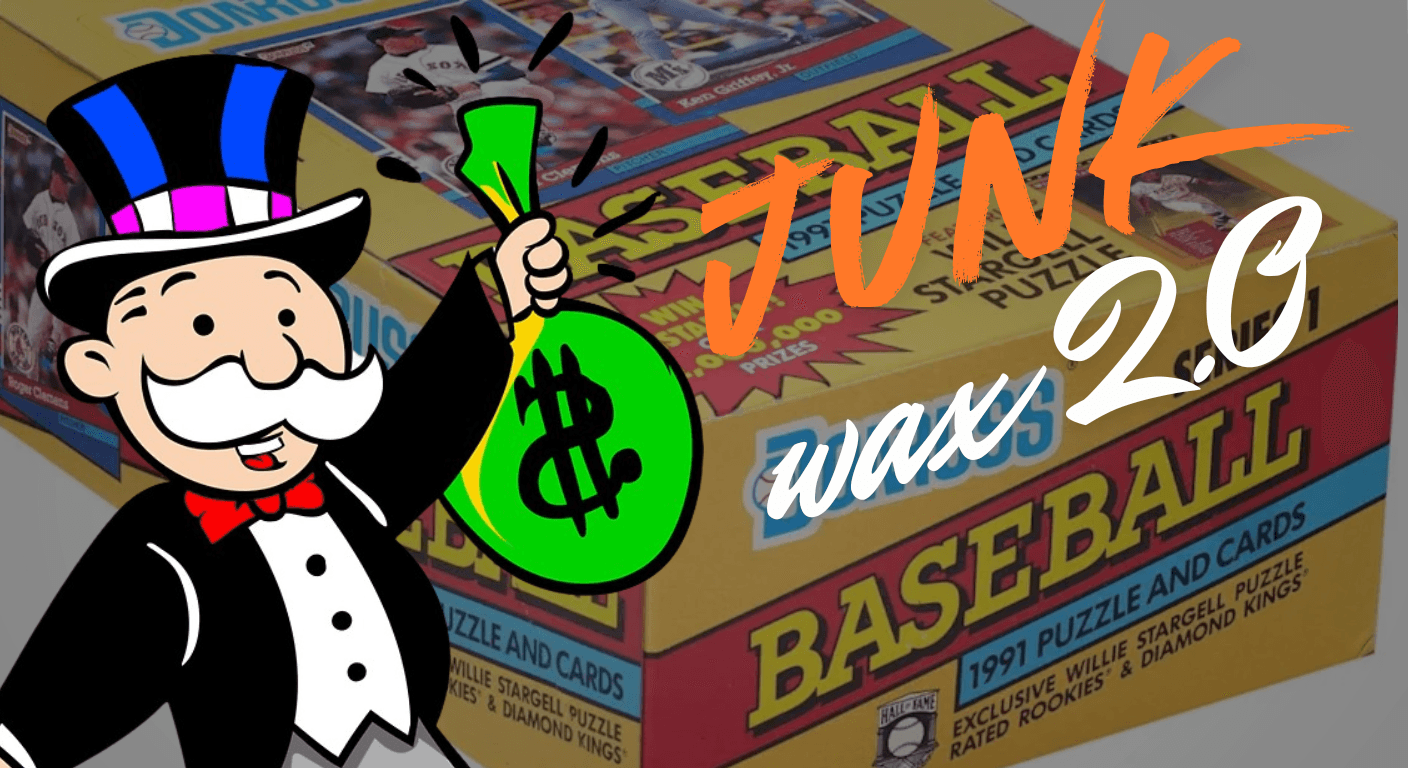
The Junk Wax Era. From 1986 to 1993, card manufacturers overproduced at an insane clip. The result: rookie cards of Ken Griffey Jr., Frank Thomas, and Chipper Jones from that window are worth cents today. You can't make a card scarce by printing millions of it.
The 1990s comic bust. Gimmick covers, foil, and event hype drove speculation into Death of Superman and Spider-Man #1. Then it snapped. The market contracted at roughly 10% a month starting in June 1994. Around two-thirds of comic shops closed, and Marvel filed for bankruptcy in 1996.
The keys survived. The speculation didn't. We've written before about how original comic art keeps outrunning the books, and the pattern holds: scarcity you can't fake is the only scarcity that lasts.
Then NFTs took the same script digital and added a tool the old bubbles never had.
Chainalysis tracked $44.2 billion in NFT inflows in 2021. The catch: Dune Analytics found that more than 80% of NFT trading volume in January 2022 was wash trading. Sellers trading with themselves to fake demand and price.
That is shill bidding wearing a blockchain. And the floor fell out. The average NFT price dropped roughly 92%, from about $3,894 in May 2022 to about $293 by February 2023.
Wash trading manufactures the appearance of demand. For a while it works. Then the real buyers do the math.
The Honest Verdict
Most collecting is a genuine passion market. Hold that first, because it's true.
At the top end, opacity plus money-movement incentives plus documented manipulation is also true. Shilling, in every form, does the same thing. It bootstraps fake demand and corrodes trust on a delay. The price moves now. The reckoning comes later.
There's a structural angle worth being honest about. The thing shillers exploit is the live, visible bid ladder. The public climb they use to manufacture momentum and fake a demand signal. Remove the ladder and you remove the theater.
Sealed, blind, or hidden bidding does that. Everyone submits privately, so there's no public ladder to game. Be clear about the limit, though. In a sealed second-price format, a hidden fake bid can still nudge what the winner pays. Hidden bidding kills the visible-momentum manipulation. It does not kill the incentive to lie.
And draw the distinction sharply, because this piece just spent five sections attacking opacity. Sealed bidding is a fairness mechanism. Nobody games a public ladder. That is not the same as the bad opacity condemned here, which is hidden ownership, shell companies, undisclosed reserves, and outright fake bids. Private bids, public rules. That's the split.
Disclosure: hidden bidding by default is the model the Nerdbeak marketplaces use. We mention it as one structural choice among several, not a cure-all.
So what does a collector do with all this.
Spot the opacity. Ask who the consignor is and whether they can bid. Read the reserve terms before the gavel, not after. Demand transparency from the house, and walk when you don't get it. Value provenance, because a clean chain of ownership is the one thing a shill bid can't manufacture.
Are collectibles truly collectible, or partly vehicles for moving money? The honest answer is both, depending on the price tag. The job is knowing which room you're standing in.
---
A Note on This Reporting
This is an opinion piece. Patrick Ryan's stated position is that his bid was a mistake, not shilling, and we present it that way. Alt v. PWCC is a filed allegation in pending litigation, not a proven finding. Yves Bouvier was not convicted of anything. His Geneva criminal case was closed with no charges and the parties settled. Figures cited are drawn from public reporting, court filings, and government documents, and where a number is disputed or directional, we say so.
Sources
- Shill bidding controversy sparks debate in the hobby — cllct
- Trading card company Alt files lawsuit against PWCC — Sports Collectors Digest
- The Art Industry and U.S. Policies that Undermine Sanctions — US Senate Permanent Subcommittee on Investigations, July 28, 2020
- Modern art was CIA 'weapon' — Frances Stonor Saunders, The Independent, 1995, reprinted at Voltaire Network
- The sprawling legal dispute between Yves Bouvier and Dmitry Rybolovlev is finally over — Artnet News
- Dmitry Rybolovlev and Yves Bouvier settle nine-year legal feud — The Art Newspaper
- Shill bidding and the 2001 eBay art-auction fraud case — NYC Criminal Lawyer
- Kenneth Fetterman, the eBay shill-bidding case — Wikipedia
- NFTs Wash Trading dashboard — hildobby, Dune Analytics
- Report Preview: The 2021 NFT Market Explained — Chainalysis