Nintendo is 137 years old. It was founded 56 years before the atomic bomb. 80 years before the moon landing. 96 years before it released Super Mario Bros.
The company that makes Mario, Zelda, and Pokemon started by making handmade playing cards for gambling halls in Kyoto. The journey from there to a $70 billion market cap, a $1.36 billion animated movie, and sealed NES cartridges selling for $2 million is one of the strangest stories in business.
It is also the story of why Nintendo items are the most collectible products in gaming. Every era produced something worth collecting. From 1889 hanafuda decks to the Switch 2.
The Card Company (1889 to 1960s)
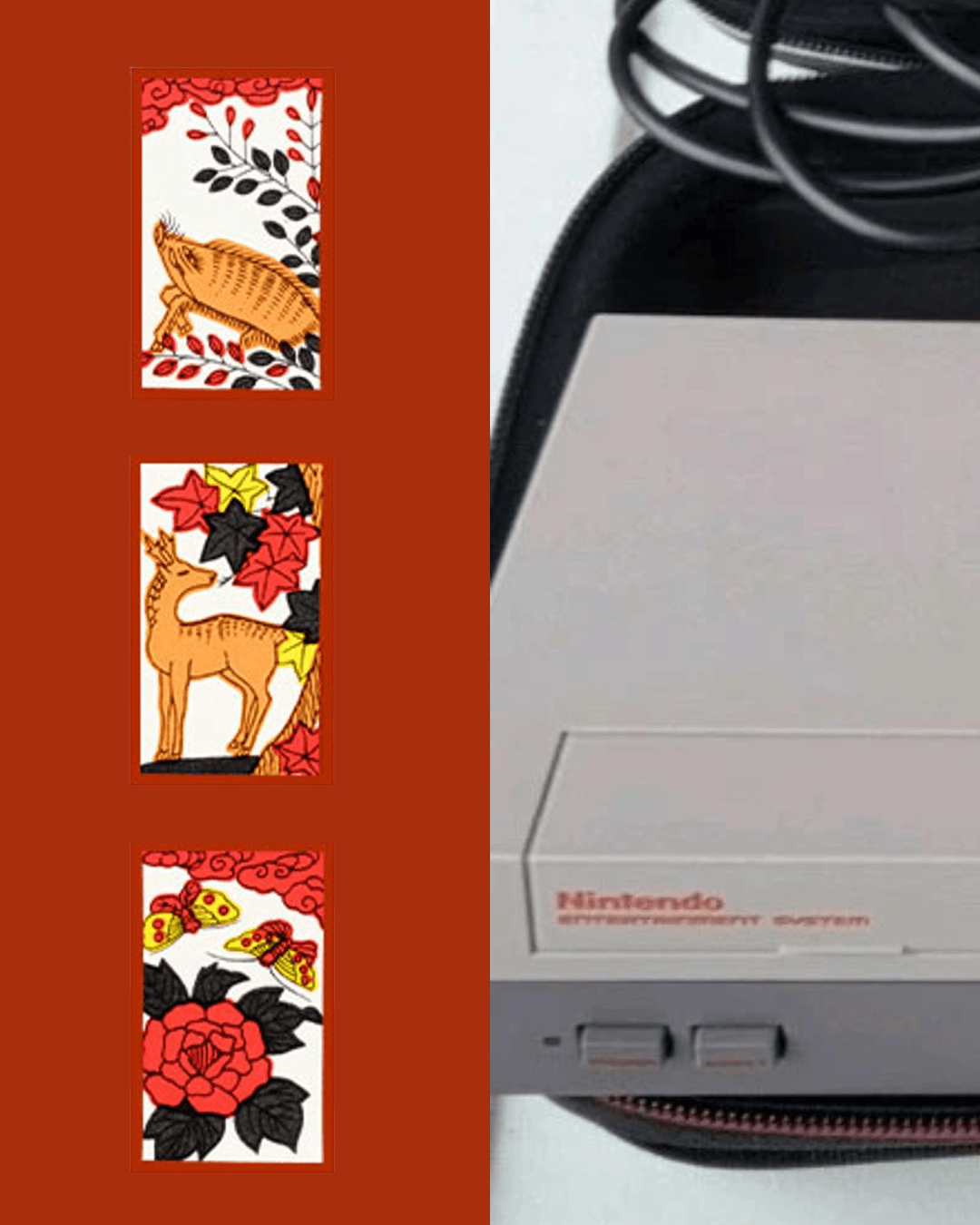
Fusajiro Yamauchi founded Nintendo on September 23, 1889, in Kyoto, Japan. The company made hanafuda. Flower cards. A 48-card deck divided into 12 suits representing months of the year. Each card was handmade using bark from mulberry and mitsu-mata trees.
Hanafuda were popular with yakuza-run gambling parlors. Other card manufacturers backed away from that market. Yamauchi leaned into it.
The name "Nintendo" is commonly said to mean "leave luck to heaven." But even Yamauchi's descendants have said they don't actually know the true meaning.
Fusajiro had no son. He adopted his son-in-law through the Japanese mukoyoshi tradition. The son-in-law took the Yamauchi name and became the second president in 1929.
Then came Hiroshi Yamauchi. Fusajiro's great-grandson. He became the third president in 1949 at age 21 after his predecessor suffered a stroke. His condition for taking the job: he would be the only family member employed at the company. His older cousin was fired.
Hiroshi Yamauchi would run Nintendo for 53 years. He transformed it from a regional card maker into the most important company in video game history.
In 1953, Nintendo became the first Japanese company to mass-produce plastic playing cards. In 1959, Yamauchi secured a licensing deal with Walt Disney to put Disney characters on Nintendo's cards. Profits tripled. Nintendo went public in 1962.
You can still buy Nintendo hanafuda cards today, including Mario-themed sets. Vintage pre-war decks from the early 1900s are serious collectors' items.
The Wild Years (1960s to 1970s)
Between 1963 and 1968, Nintendo tried everything. A taxi company called Daiya. It failed because of union problems. Instant rice. A TV station. And allegedly, a chain of love hotels. Nintendo has never confirmed the love hotel claim, but multiple sources report it.
None of it worked. But one thing changed everything.
In 1965, Nintendo hired a maintenance worker named Gunpei Yokoi to fix the machines on the hanafuda assembly line. A year later, Hiroshi Yamauchi noticed an extending arm toy that Yokoi had built for fun. Yamauchi ordered it developed for Christmas.
The Ultra Hand sold 1.2 million units. Yokoi went from maintenance worker to lead inventor. He created the Love Tester (a novelty device that measured "love" through skin conductivity) and the Ultra Machine (a pitching machine for kids).
In 1970, Nintendo developed the Beam Gun series using light gun technology. In 1973, they installed a Laser Clay Shooting System in converted bowling alleys across Japan. It was a hit. Then the 1973 oil crisis nearly bankrupted the company, leaving Nintendo with billions of yen in debt.
Game & Watch and the Electronic Revolution (1980)
Yokoi was riding a bullet train when he saw a bored businessman pressing buttons on a calculator. That observation became the Game & Watch.
The first unit, called Ball, launched on April 28, 1980. Yokoi's target was 100,000 units. The series sold 43.4 million.
Yokoi also invented the D-pad for the Game & Watch. The cross-shaped directional pad that became the standard input device for every console that followed. He called his approach "Lateral Thinking with Withered Technology." Use mature, cheap, well-understood tech in creative ways.
Game & Watch handhelds are now serious collectibles. A commemorative unit sold for $9,100 at auction.
Donkey Kong and the Birth of Mario (1981)
In 1980, Nintendo released an arcade game called Radar Scope. It sold well in Japan. It bombed in America. Thousands of unsold cabinets sat in a warehouse in New Jersey.
Hiroshi Yamauchi gave the job of converting those cabinets to a young industrial designer named Shigeru Miyamoto. It was Miyamoto's first game.
Miyamoto created Donkey Kong. Released July 9, 1981. The initial 2,000 converted Radar Scope cabinets sold immediately. At peak, Nintendo was selling 4,000 Donkey Kong arcade cabinets per month. Over 60,000 units in the US alone. By 1983, the game had generated more than $280 million in revenue.
The hero was a carpenter originally called Jumpman. He was renamed Mario after Mario Segale, Nintendo of America's warehouse landlord in Tukwila, Washington. One version of the story says Segale confronted Nintendo's president demanding back rent, and the staff named the character after him as a joke. Segale told The Seattle Times in 1993: "You might say I'm still waiting for my royalty checks." He died in 2018.
Saving the Industry (1983 to 1989)
The North American video game industry collapsed in 1983. Revenue dropped 97%. From $3.2 billion to near zero. Atari lost $356 million and laid off 3,000 workers. Retailers refused to stock video game products.
Nintendo launched the Famicom in Japan on July 15, 1983. When they brought it to America in October 1985, they deliberately avoided calling it a video game console. They named it the Nintendo Entertainment System. Used terms like "control deck" and "Game Pak." Designed the front-loading cartridge slot to look like a VCR. Included R.O.B., a toy robot peripheral, to convince skeptical toy retailers to stock it.
It worked. Super Mario Bros. sold 1.2 million copies in its first month in Japan. Lifetime sales reached 40.24 million. By 1989, US home video game sales hit $5 billion, surpassing the 1982 pre-crash peak. Nintendo had single-handedly revived the industry.
The NES sold 61.91 million units worldwide. Nintendo introduced the "Seal of Quality" for strict quality control on licensed games. That seal is now one of the most recognized symbols in gaming and a key authentication marker for collectors grading sealed NES games.
The Game Boy (1989)
Gunpei Yokoi's next masterpiece. Launched in Japan on April 21, 1989. The initial 300,000 units sold out in two weeks.
Yokoi deliberately used a monochrome screen instead of color. It gave the Game Boy dramatically longer battery life than competitors like the Sega Game Gear and Atari Lynx. Both had color screens. Both lost.
The key decision was the pack-in game. Henk Rogers convinced Nintendo of America's president to bundle Tetris instead of Super Mario Land. His argument: Tetris would appeal to everyone, not just kids. He was right. Tetris Game Boy sold over 35 million copies.
The Game Boy and Game Boy Color combined for 118.69 million units sold. The most successful handheld of its era.
The Console Wars (1990 to 2002)
The Super Famicom launched in Japan on November 21, 1990. Initial 300,000 units sold out within hours. Super Mario World was a launch title. The SNES became the best-selling 16-bit console at 49.1 million units despite fierce competition from Sega's Genesis.
The Nintendo 64 arrived in 1996. Super Mario 64 was the launch title. The first fully 3D Mario game. It established the template for 3D platformers. 360-degree analog control. Dynamic camera. Nearly 12 million copies sold. A sealed copy later sold for $1.56 million.
The N64 sold 32.93 million units. Respectable but trailing Sony's PlayStation. The GameCube followed in 2001 at 21.74 million units. Nintendo was losing the home console war but remained dominant in handhelds.
The Wii Revolution and the DS (2004 to 2012)
The Nintendo DS launched in 2004 and became one of the best-selling consoles of all time at 154.02 million units. The Wii followed in 2006, targeting non-gamers with motion controls. 101.63 million units. Both were the brainchild of Satoru Iwata, Nintendo's fourth president and a beloved figure in the industry.
Then came the Wii U in 2012. 13.56 million units. Nintendo's worst-selling home console. A commercial disaster that nearly derailed the company.
The Switch Era (2017 to Present)
The Nintendo Switch launched on March 3, 2017. It has sold 155.37 million units as of December 2025. That makes it Nintendo's best-selling hardware of all time, surpassing the DS.
Super Mario Odyssey sold 30.27 million copies. Mario Kart 8 Deluxe hit 70.59 million, making it the best-selling Mario game ever.
The Switch 2 launched on June 5, 2025, at $449.99. It sold 17.37 million units through December 2025. Mario Kart World was the launch title at 14.03 million copies.
The Losses
Gunpei Yokoi left Nintendo on August 15, 1996, after 31 years. He founded his own company and was developing the Bandai WonderSwan handheld. On October 4, 1997, he was in a car accident on the Hokuriku Expressway. He exited his vehicle to inspect damage and was struck by two passing cars. He was 56.
Satoru Iwata, the president who gave the world the DS and the Wii, died on July 11, 2015, from a bile duct tumor. He was 55. He had overseen early development of the Switch before his death.
Hiroshi Yamauchi, the great-grandson who ran Nintendo for 53 years and transformed it from a card company into a gaming empire, died on September 19, 2013. He was Japan's richest person in 2008.
Nintendo Today
Market cap: approximately $65 to $71 billion.
The Super Mario Bros. Movie grossed $1.36 billion worldwide in 2023. The sequel, The Super Mario Galaxy Movie, opens April 1, 2026.
Super Nintendo World theme parks are now open at Universal Studios Japan (2021), Universal Studios Hollywood (2023), and Universal Epic Universe in Orlando (2025).
The current president is Shuntaro Furukawa. Shigeru Miyamoto, now 73, remains at the company as a Senior Fellow. He is still involved in game development.
Why Every Era Matters for Collectors
Nintendo is one of the few companies where the oldest products and the newest products are both actively collected. Vintage hanafuda decks from the early 1900s. Sealed NES cartridges from 1985. Game & Watch handhelds from 1980. Wii U games that nobody bought at launch and are now gaining value because of the low install base.
The retro gaming collectibles market crossed $4 billion in 2026. Projected to hit $8.5 billion by 2033. Nintendo sits at the center of that market. Every console generation produced collectibles. Every era has its chase items.
From a playing card company in a Kyoto backstreet to the most collectible brand in gaming. 137 years. Still going.